
CRISPR/Cas9
CRISPR stands for "clustered regularly interspaced short palindromic repeats" and is a bacterial immune system. CRISPR uses guide RNA to bind the DNA and guide an enzyme called Cas9 to the desired location. By using Cas9, geneticists can cut at a specific location of the DNA, allowing them to modify it by insertion or deletion. CRISPR is the most popular technique for gene editing.

ZFN
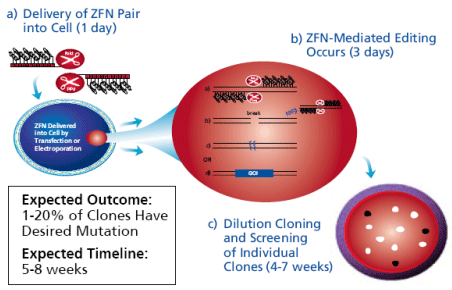
ZFN stands for "zinc finger nucleases". They are proteins that bind to DNA, producing a double strand DNA break at a specific location. It uses a DNA-binding domain that consists of a two-finger module chain. This is fused together to make a Zinc Finger Protein. This method is extremely accurate because dual binding is required before the molecules can fuse.
TALEN
TALEN
TALEN stands for "transcription activator-like effector nucleases". They are restriction enzymes that cut at specific locations of DNA. They work similarly to ZFN, only it is less accurate. Scientists can bind it to any DNA sequence, with the restriction enzymes separating the DNA into two strands.


rAAV
rAAV stands for "recombinant adeno-associated virus" and uses nucleotide sequences. This is the only method that doesn't result in a double strand DNA break. It is usually more efficient in modifying single alleles and substituting specific genes.
